
Redefining Dell.com Cross-sell experience
Case study 2022
Overview
No doubt, everyone has shopped for laptops both online and offline, and have looked for accessories that go along with their laptop purchase. Cross-sell, in this context, is a way for Dell.com to help its consumers find the right accessories to go with their laptop purchase, catering to their needs accordingly. I was the product designer for this section.
Client: Dell Project
Date: Sept 2021
Platform: dell.com E-commerce
Target audience: Consumers & small businesses / US, UK, Canada
My Role
UX planning:
Timelines, research, conduct sessions, & roadmap)
Lead design process:
Problem discovery, framing, ideation, iterative development, validation, delivery, and maintenance
Partnering:
Researchers, engineers, designers, product owners, and business stakeholders.
Development:
Testing team, Design documentation, & support
Hypothesis
Having relevant electronics & accessories (E&A) recommendations at the right place in the user purchase path and at the right time in the user journey will help us improve the customer experience and thereby will positively impact the user experience.
Business goal
Enhance the overall experience
Improve CSAT
Improve E&A attach rate
Improve conversion
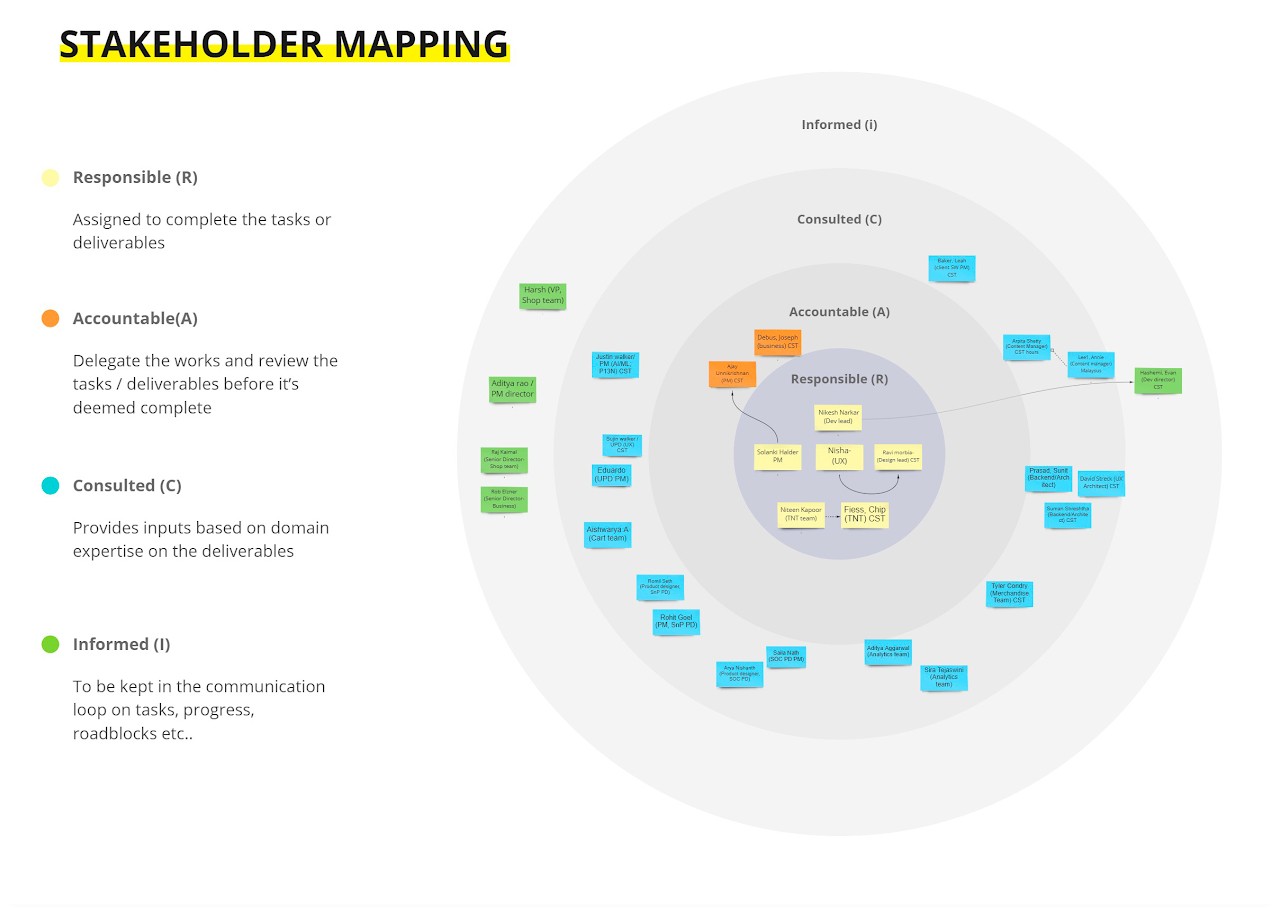
Pre-Discovery
The idea here is to capture & document people that are involved (directly/ indirectly) in the whole product designing process. it helps us to reach out to the right people for advice/ feedback/ exchange required information in the process.
Design menthodogy
Approach
This is my favorite part of Dell. I like the fact that they have a clear & simple process that helps us explore problems, synthesize, prioritize & explore design solutions, and validate. It's collaborative, everyone is involved in this process from the beginning (problem discovery to implementation phase) so there would not be any surprises and the perfect balance in the team. The whole idea here is to go from uncertainty to certainty by defining MVP.
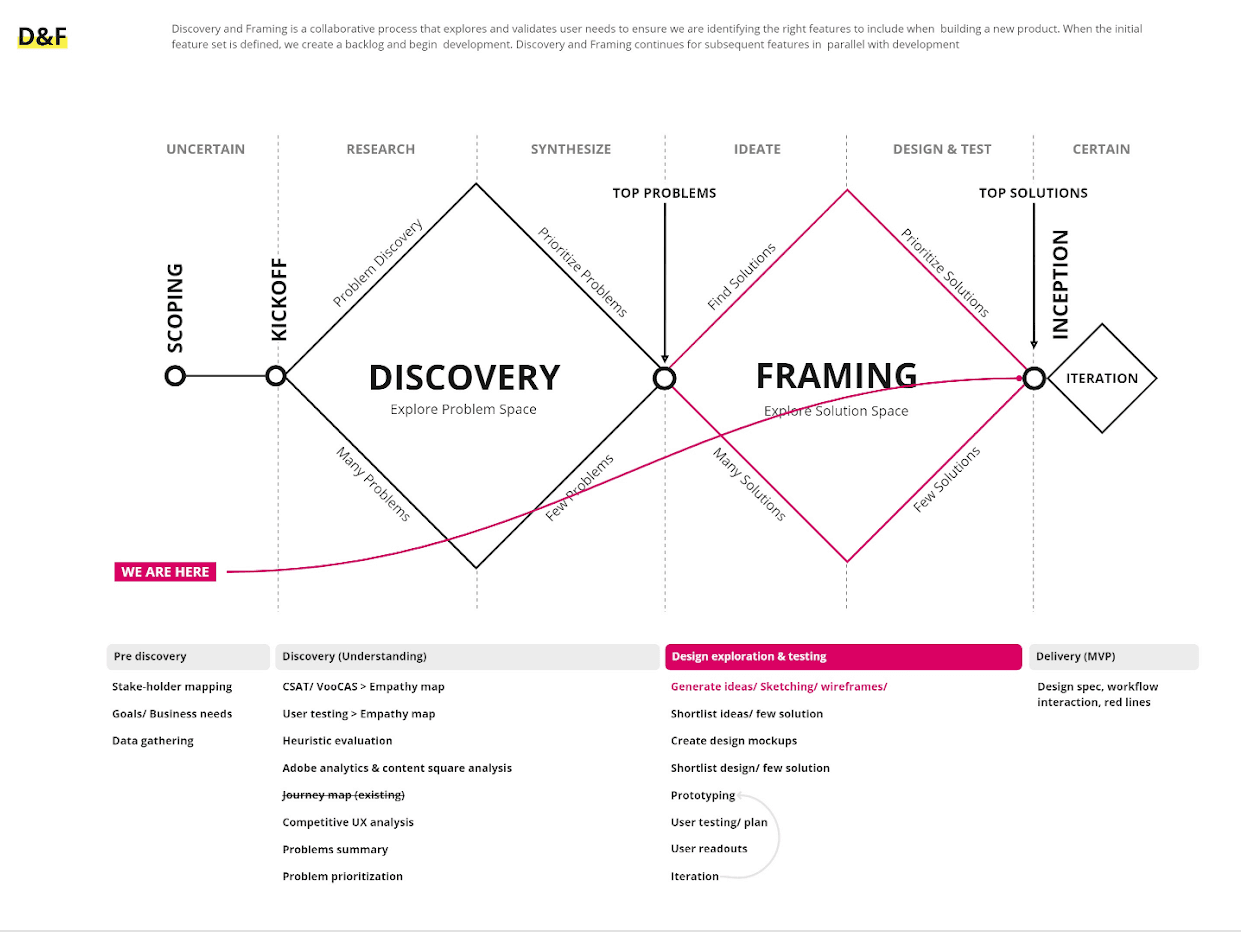
Discovery Phase 01
Research (Problem discovery)
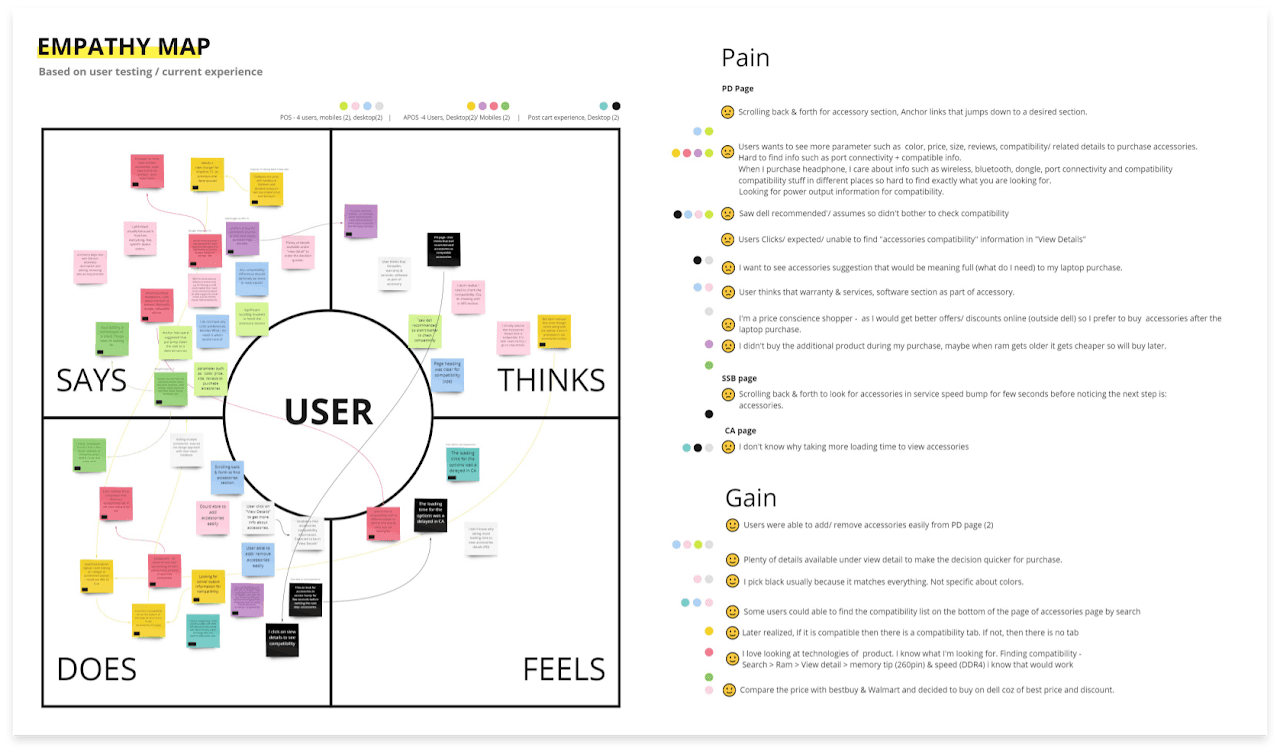
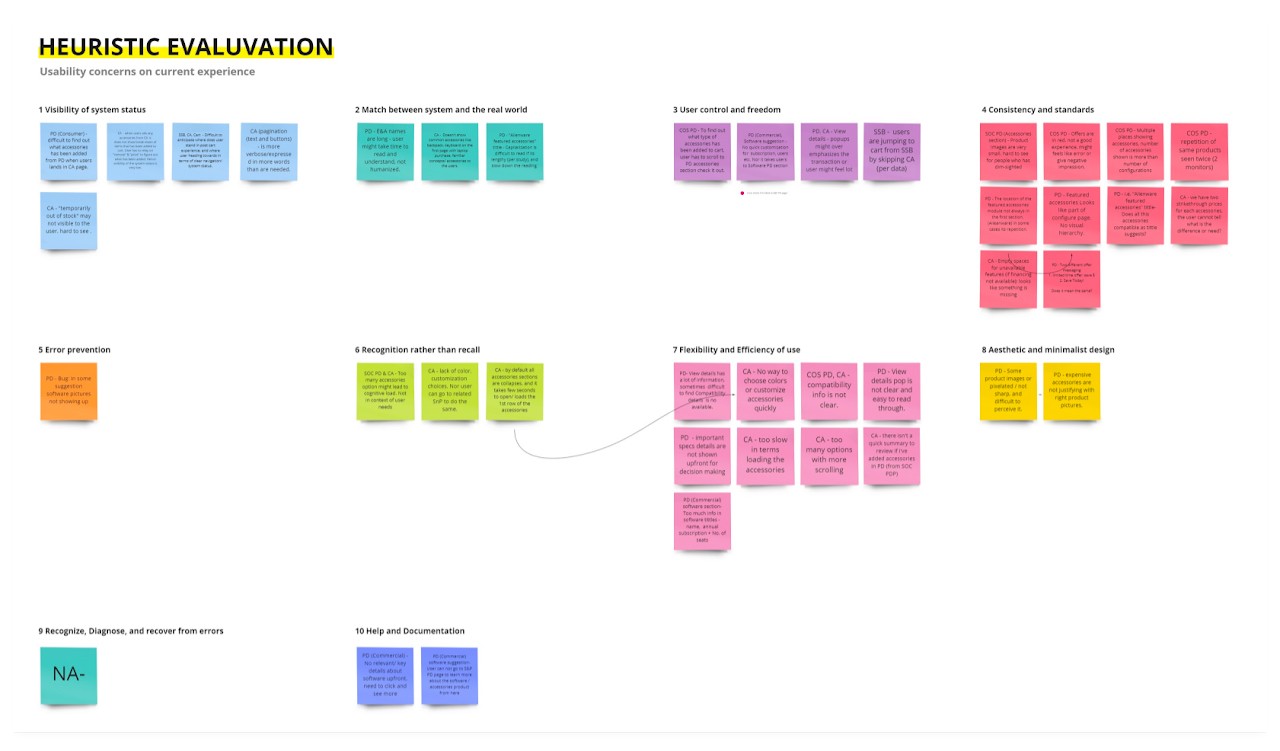
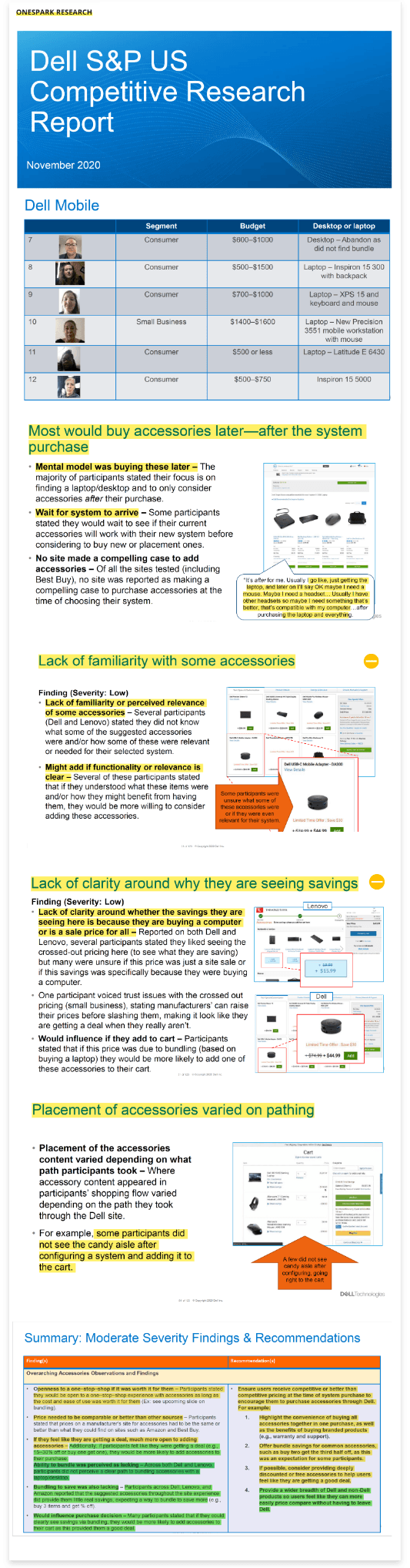
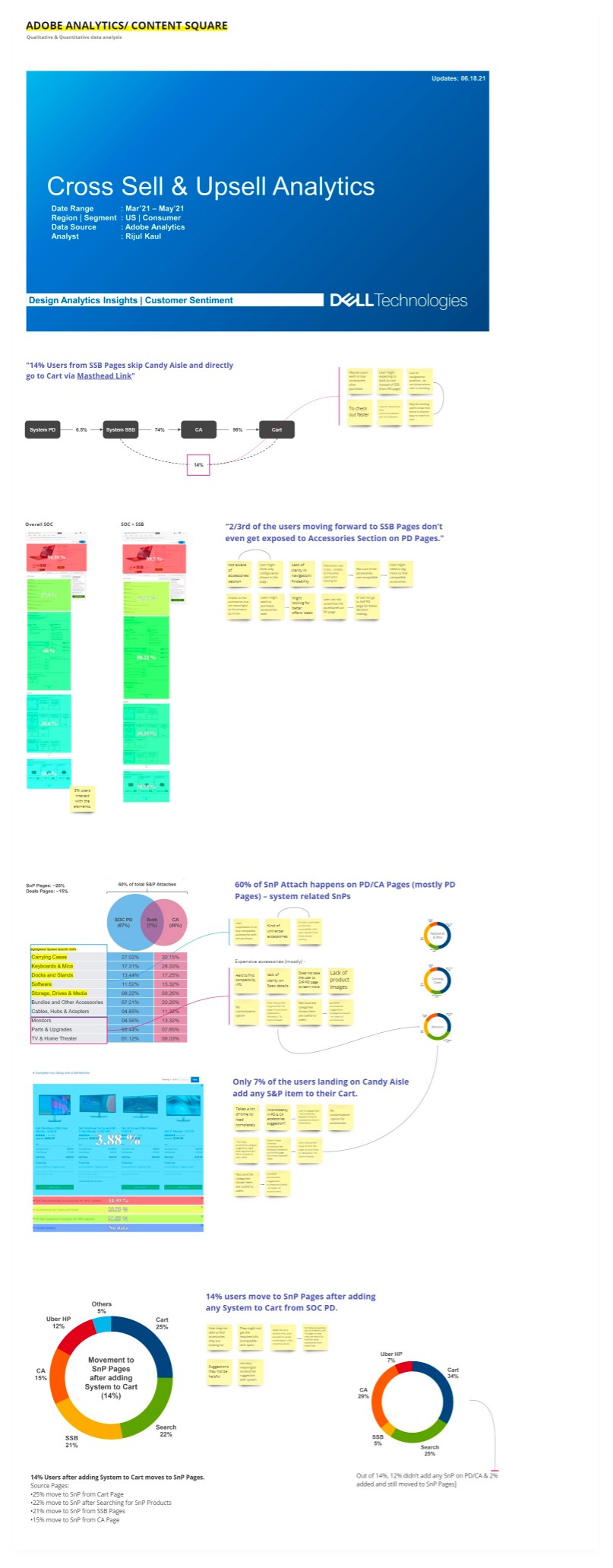
The discovery phase was focused on exploring and gaining a deep understanding of the business and user problems. To accomplish this, we gathered and analyzed various data points, including customer satisfaction (CSAT) scores, Voice of the Customer as a Service (VoCaaS) feedback, conducted user testing and interviews, performed heuristic evaluations, and examined analytics data. Through these efforts, I was able to consolidate all the findings into a problem summary. This summary serves as a foundation for prioritizing the problems and enables us to generate use cases and scenarios to ideate potential solutions.
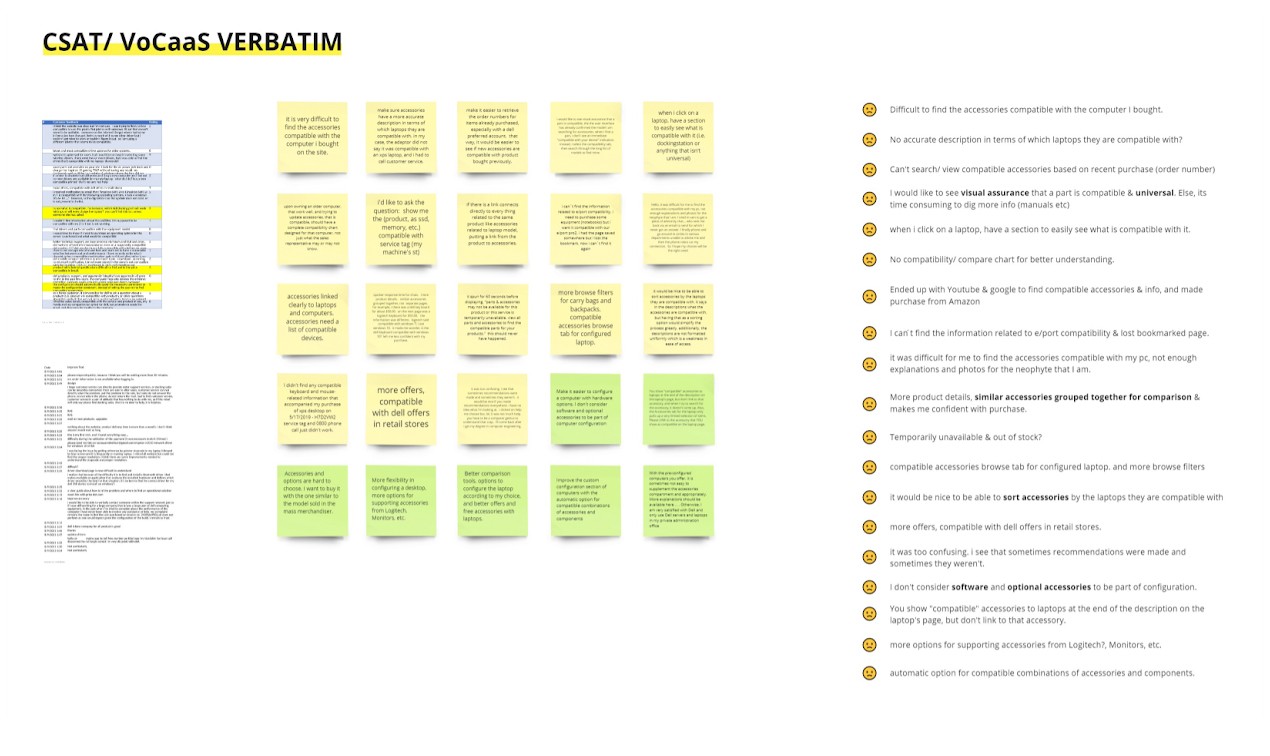
Customer Satisfaction Score (CSAT)
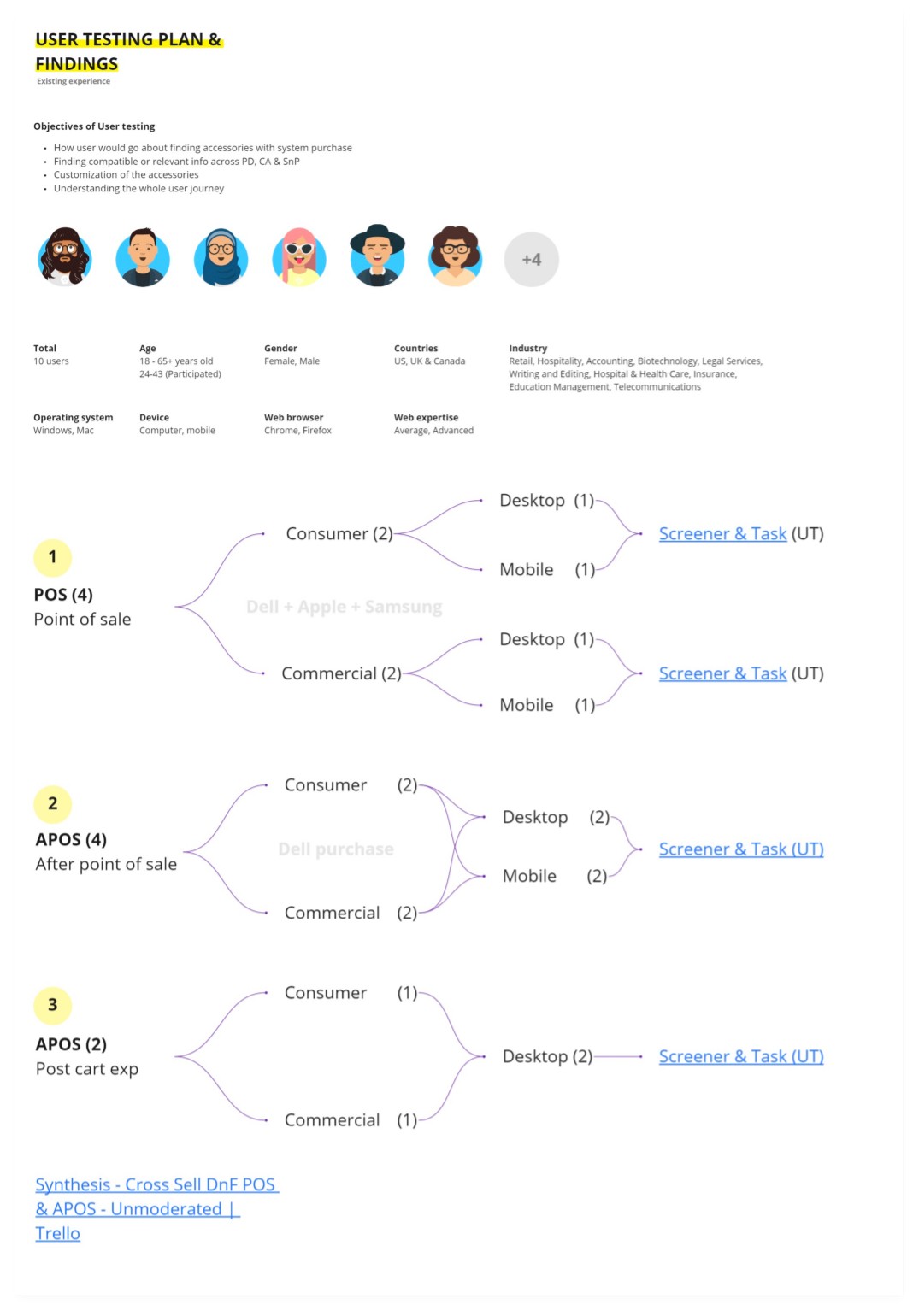
User Testing
Heuristic evaluation
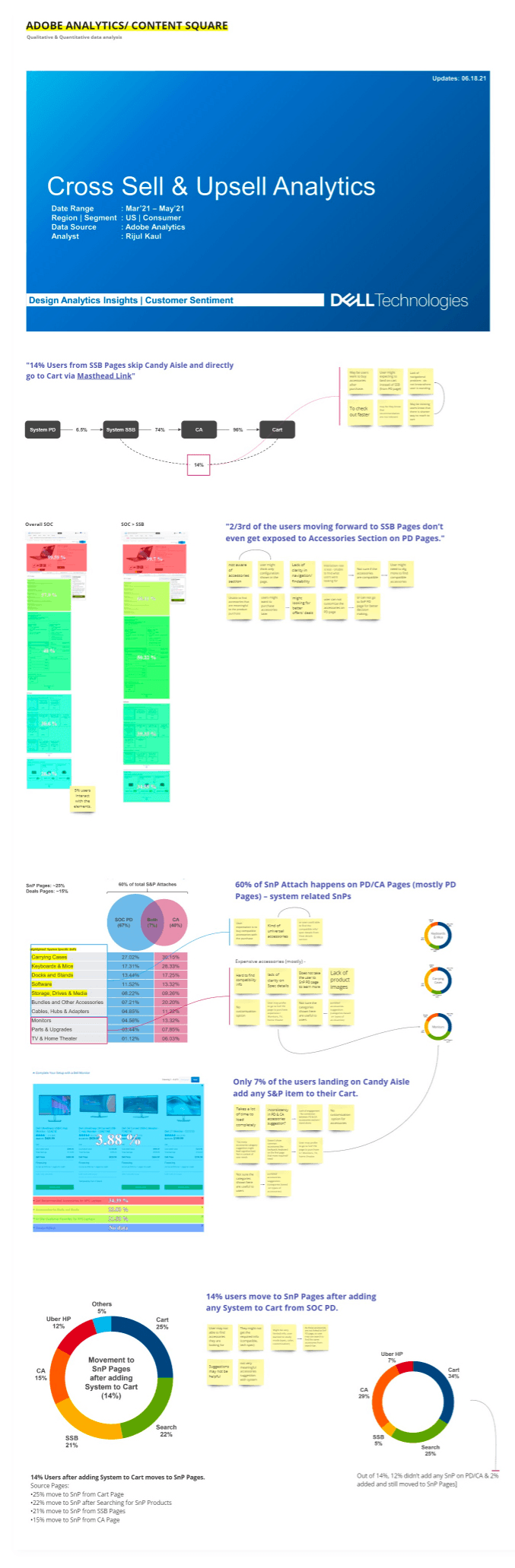
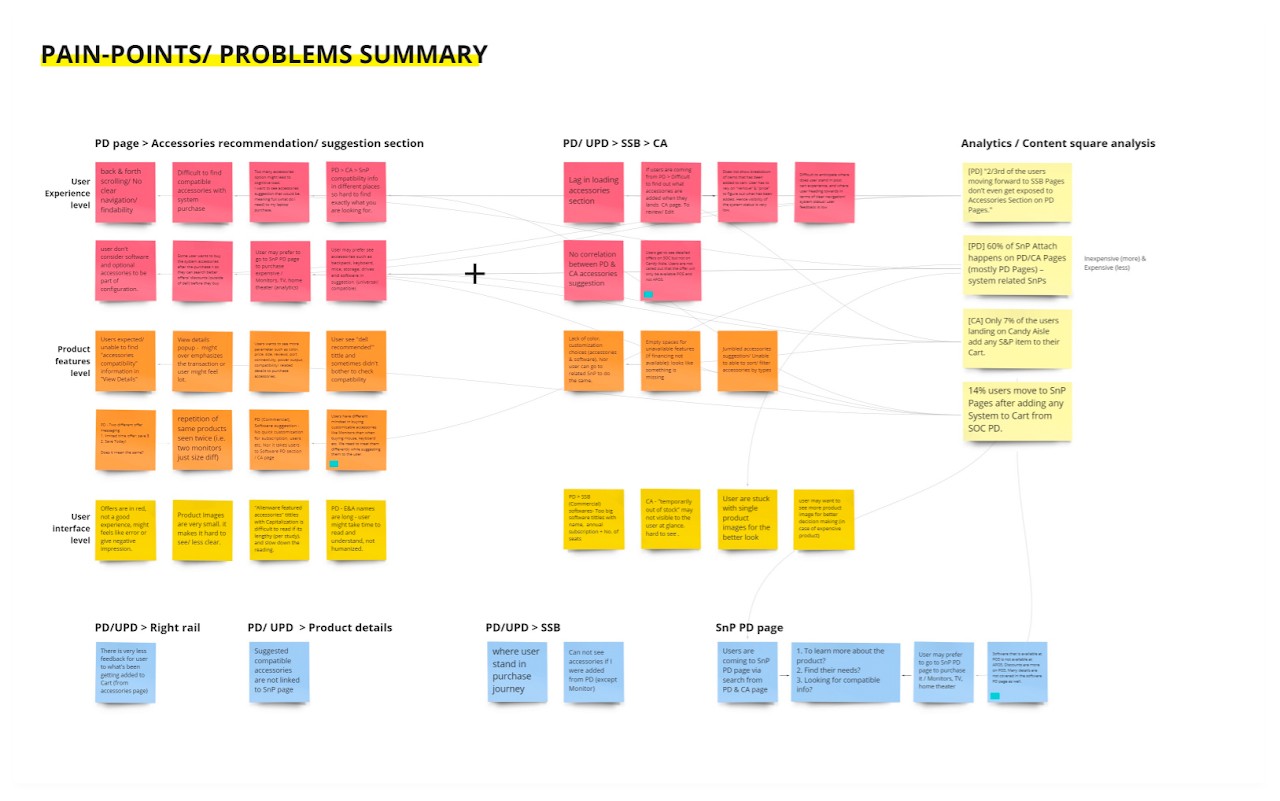
problem summary
Discovery Phase 02
Synthesis (Prioritize Problems)
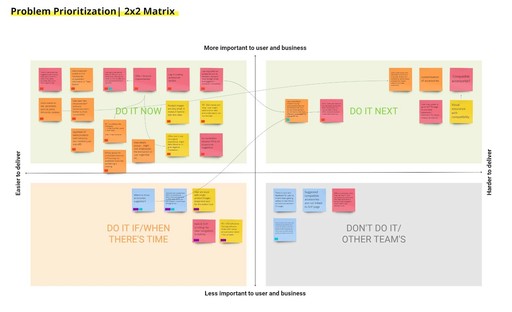
On a high level, the identified user problems and priorities can be summarized as follows:
1) Point-of-sale (POS):
Users who purchase accessories along with system purchases.
The need for an appropriate entry point for accessory suggestions within the "system purchase" journey.
2) After point-of-sale (APOS):
Users who wish to purchase accessories after the system purchase.
The need for an appropriate entry point for accessory suggestions.
As a proposed solution, the priority is to address the POS problems initially, with the intention of later scaling it to cater to APOS users as part of the project roadmap. A use case has been developed for the POS user problems to guide the generation of design ideas and sketches collectively during the next session.
User Scenario (Point of Sale users)
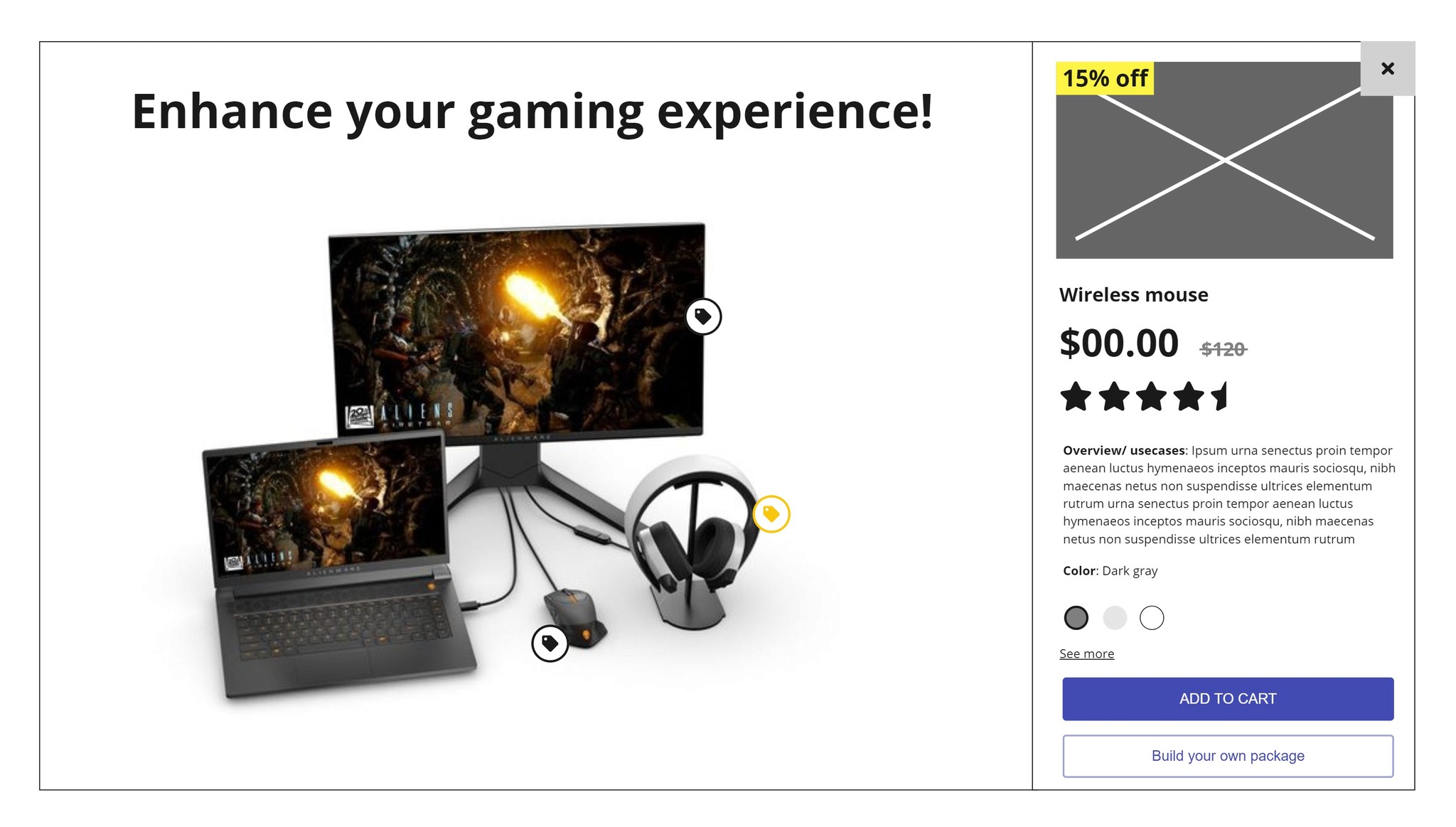
John (user) wants to buy an Alienware laptop along with some relevant accessories that enhance his gaming experience.
• ExpectationsFinding relevant accessories.
• Navigate through accessories to learn/ get enough information for a quick decision.
• Should be able to customize accessories if necessary.
Finding Phase 01
Ideation (Finding solutions)
In the upcoming ideation session, it is essential to involve stakeholders, project managers, engineers, analysts, designers, and everyone invested in the project. The goal is to generate a multitude of ideas based on the given user scenario.
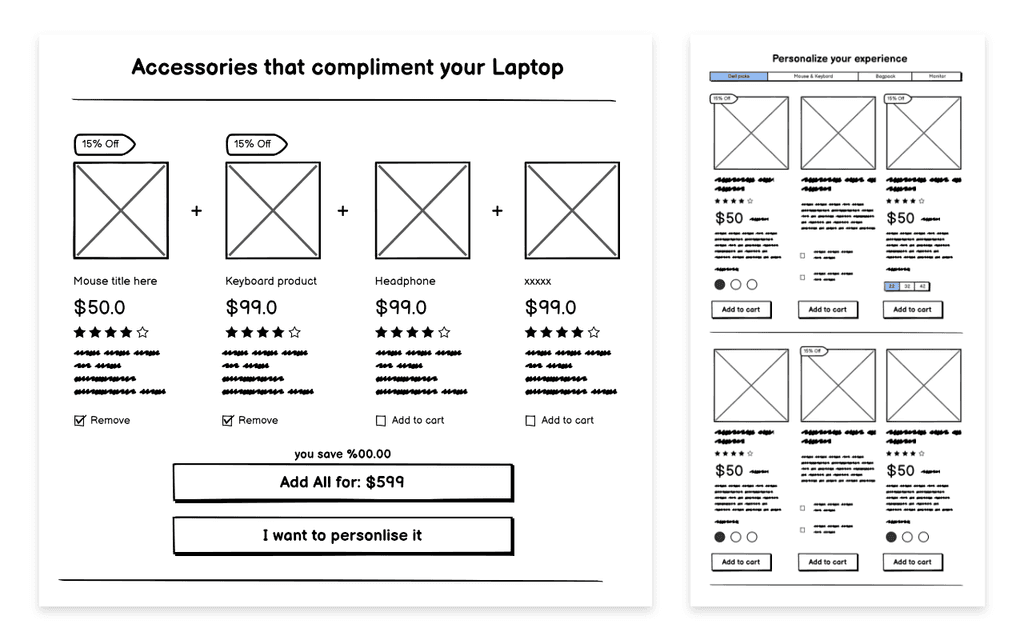
During the session, participants are encouraged to leverage the tools they feel most comfortable with, whether it's sketching on paper, using presentation software, or even digital drawing tools. The aim is to create basic drawings or sketches that effectively communicate the thoughts and concepts behind each idea.
Once the ideas are generated, it can be beneficial to conduct a voting process to identify potential ideas that should be explored further. This allows the team to focus on the most promising concepts and prioritize their exploration and development.
Finding Phase 02
Many solutions
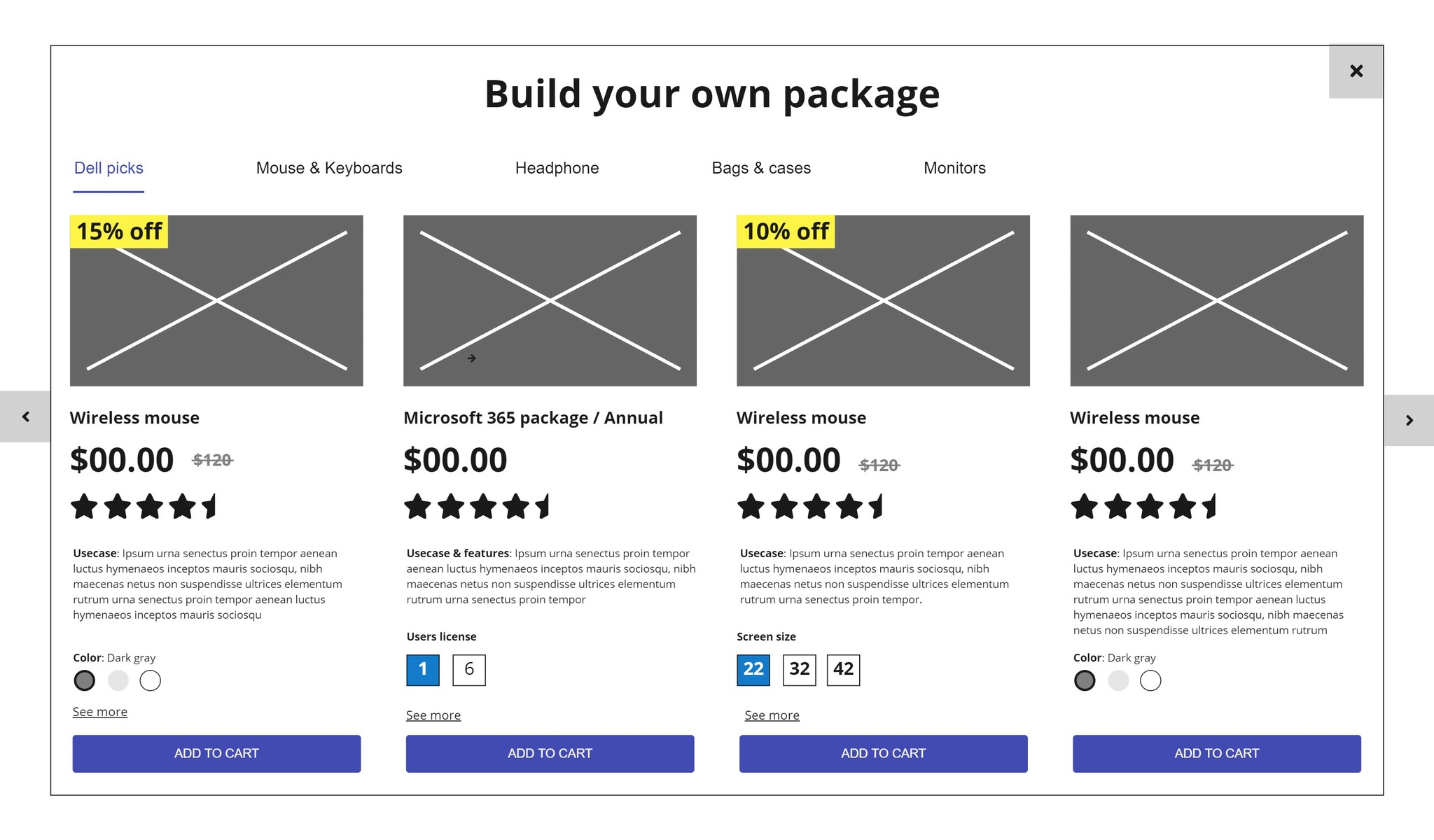
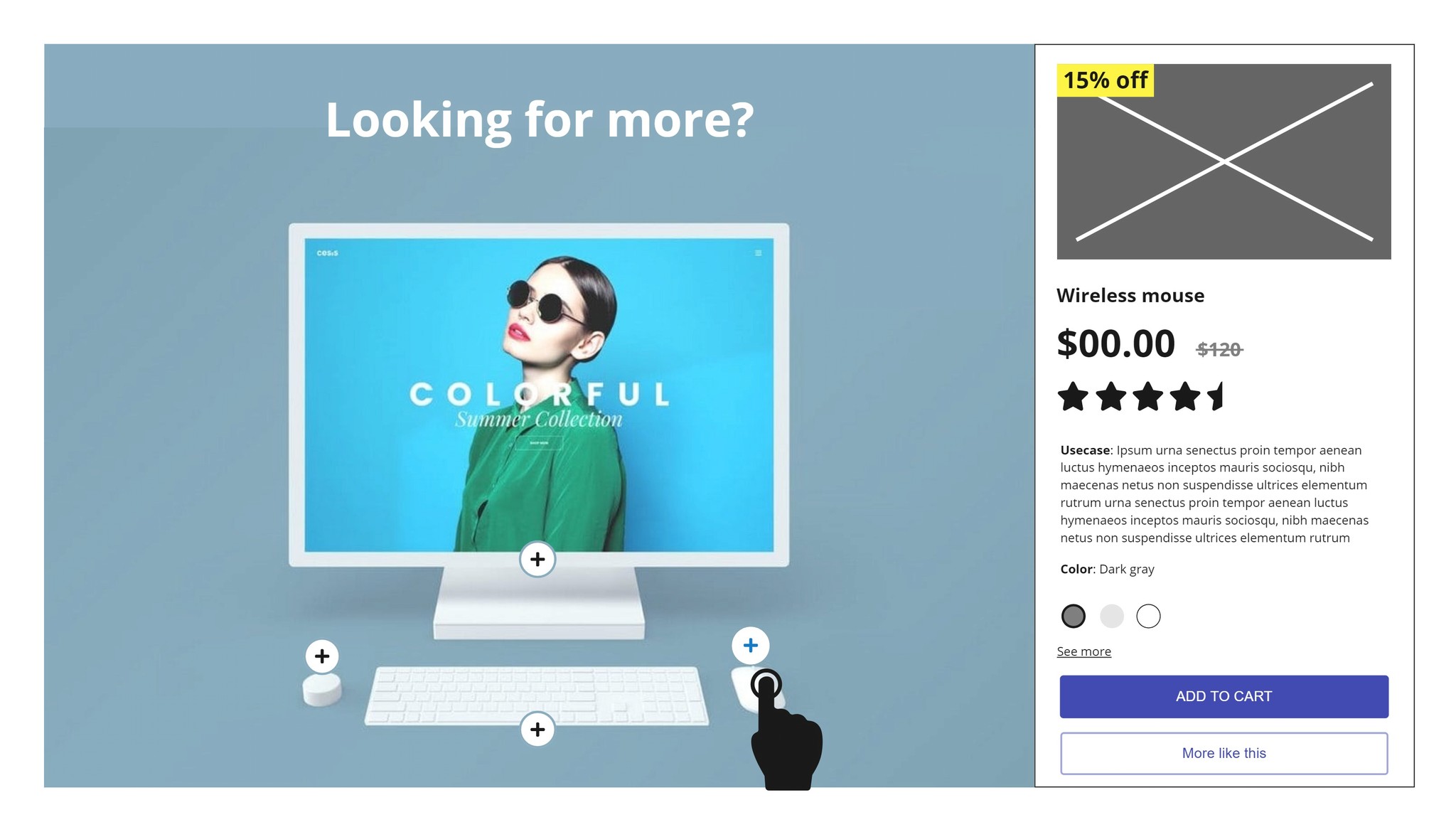
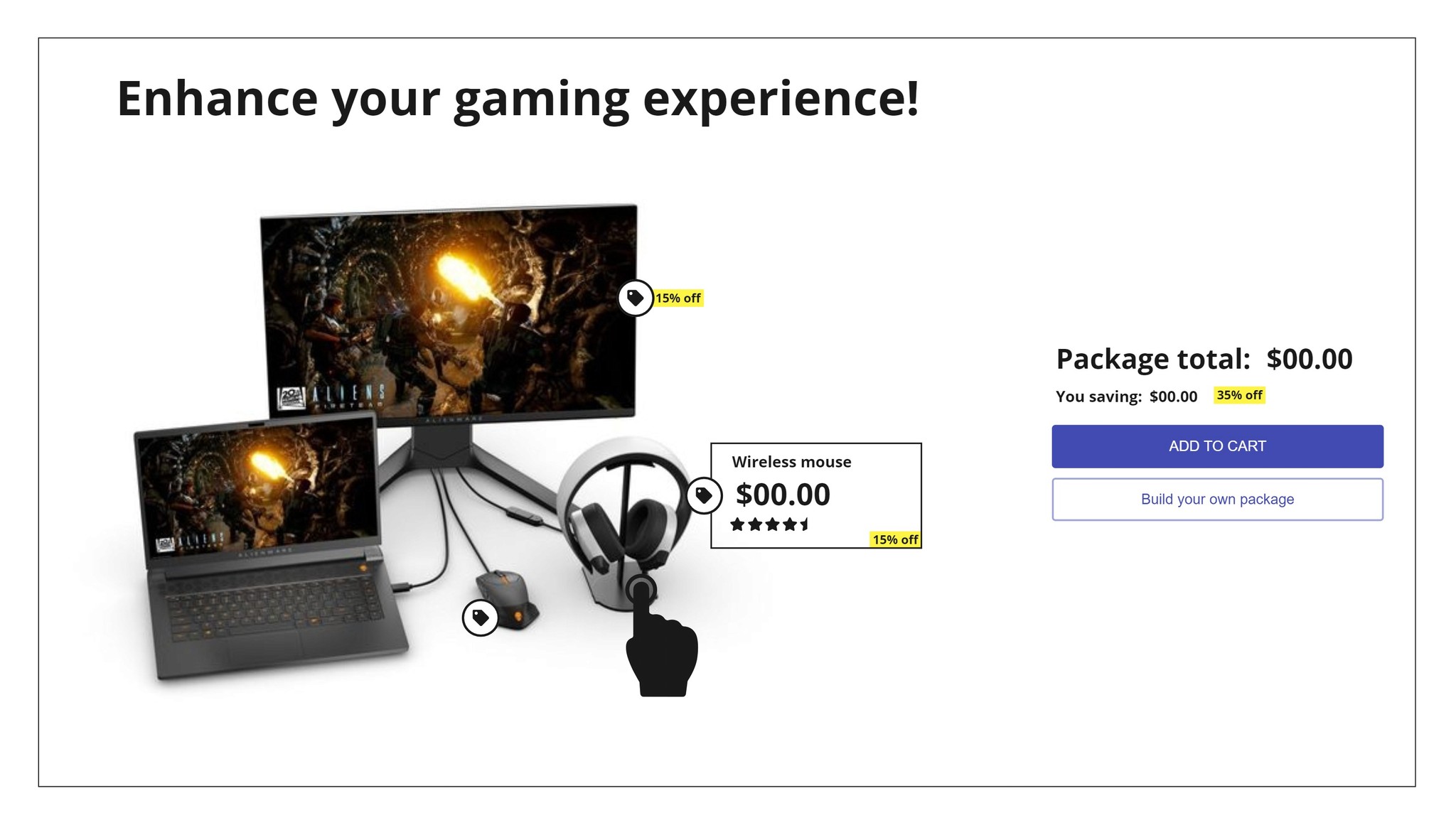
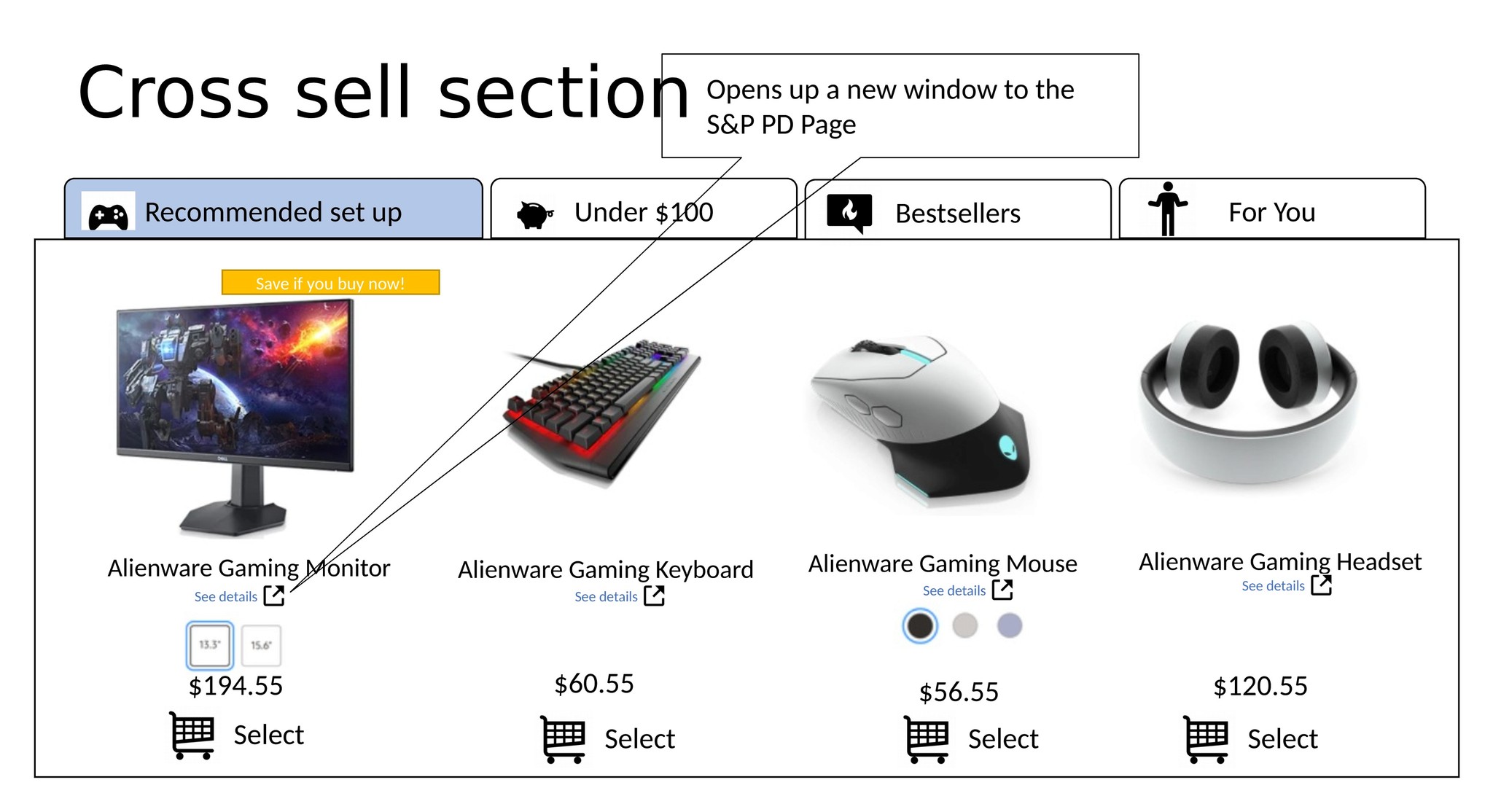
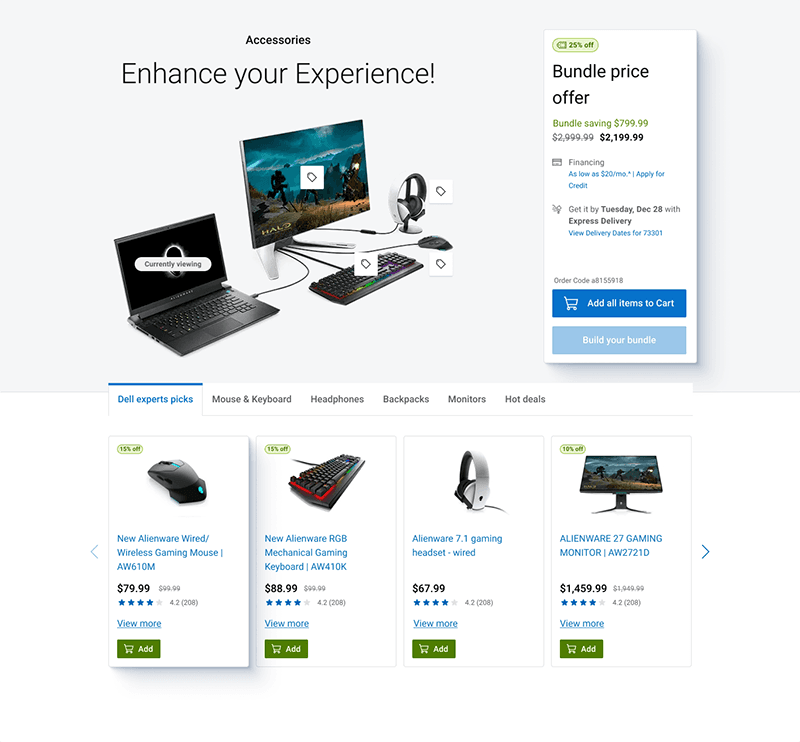
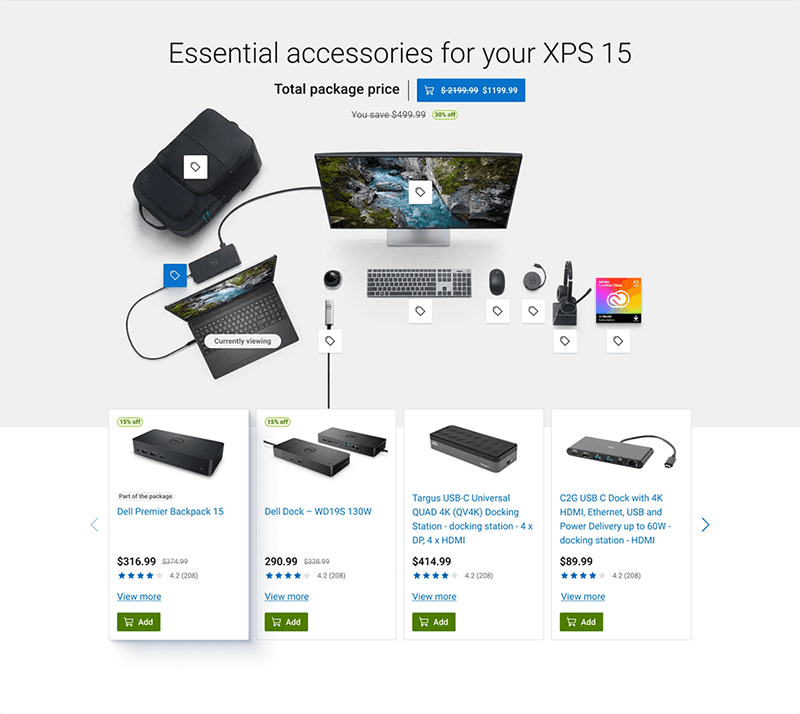
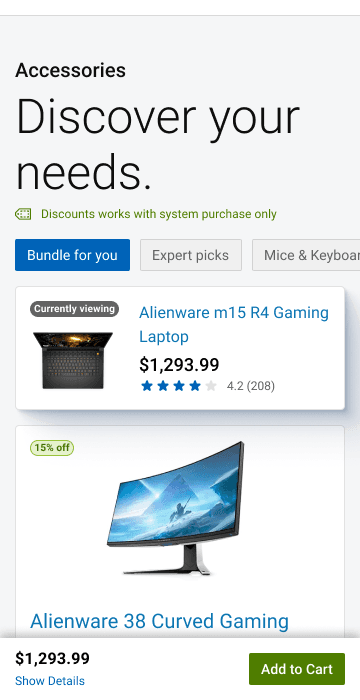
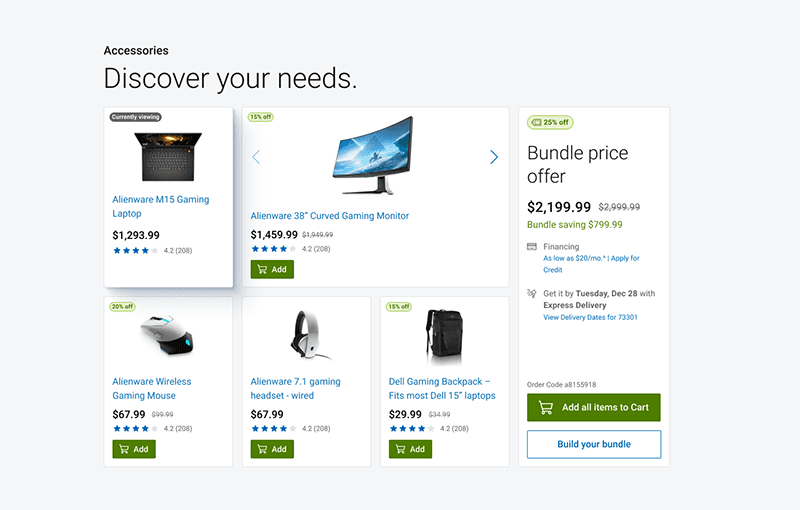
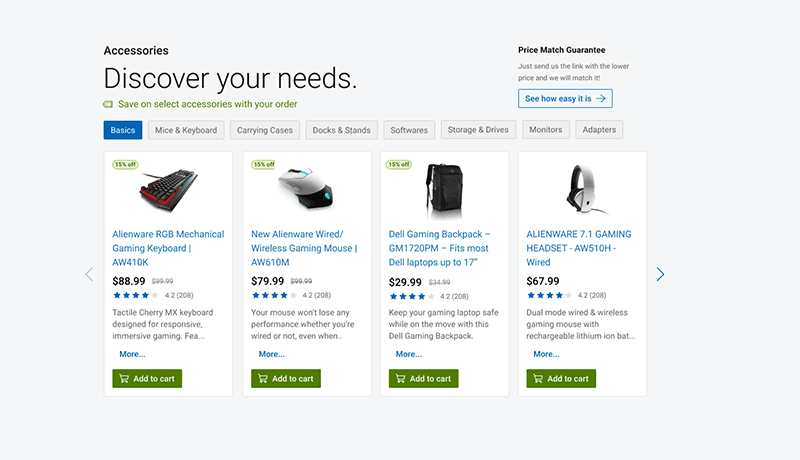
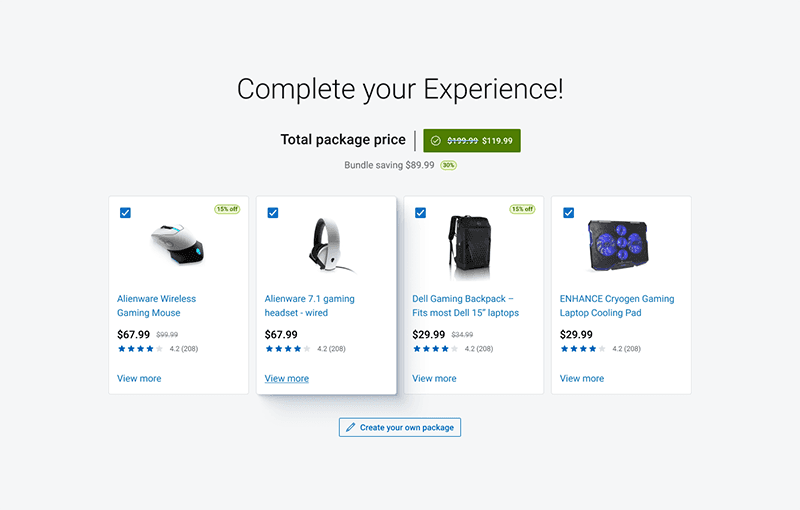
The ideation and sketching session produced multiple design explorations aimed at solving specific problems. Feasibility was evaluated for each design, and a shortlist of promising ideas was created. These selected designs will be further detailed in design recipes, ensuring alignment with project goals and user needs.
Finding Phase 03
Couple of design recipes were selected for further A/B user testing, including the recipe mentioned below. Due to time constraints, I did not do usability testing at this stage. However, I was collaborating with a dedicated team that was conducting "live" A/B user testing to gather valuable insights such as engagement rate, attach rate, and conversion rate.
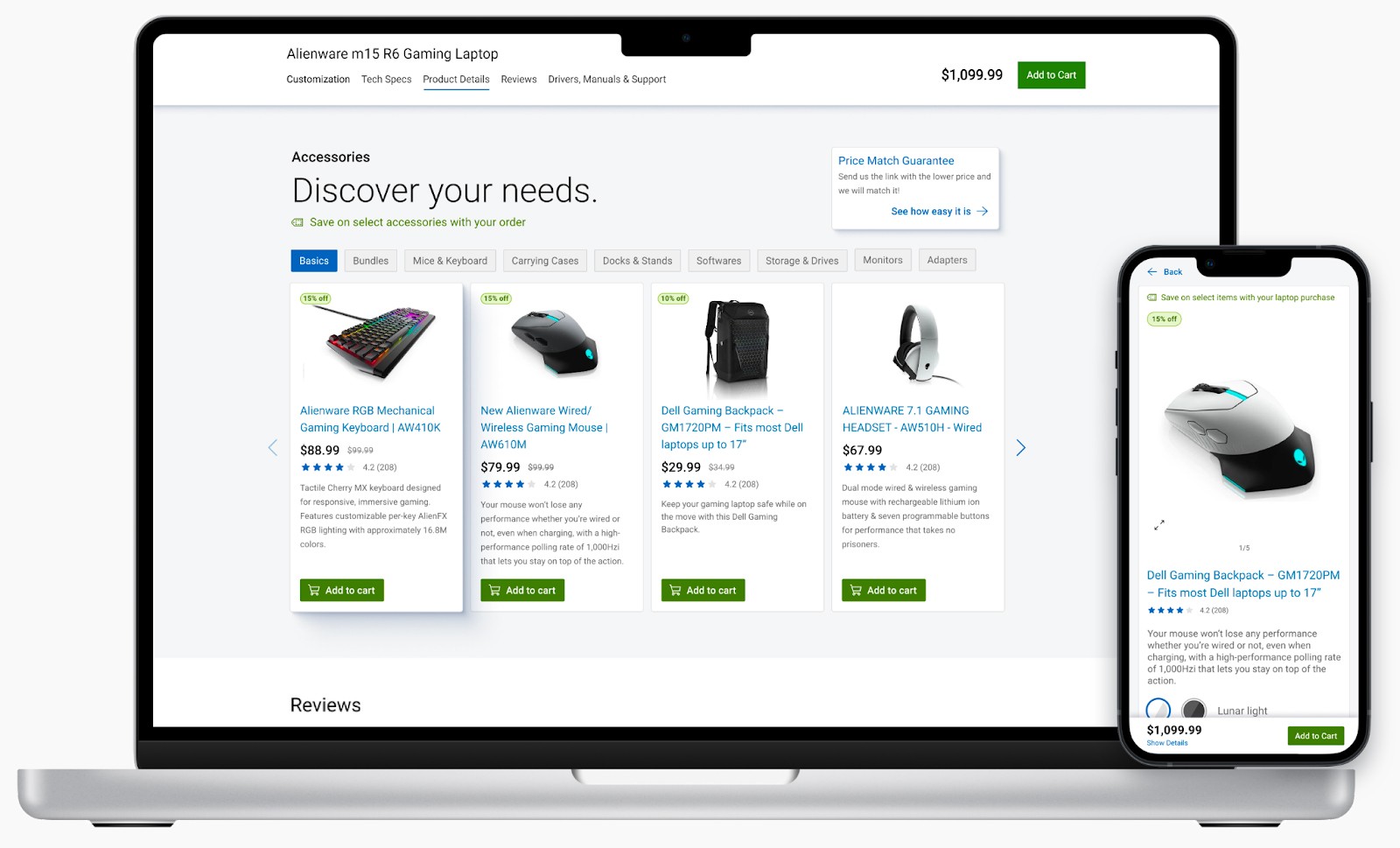
Design Improvements Highlights:
Improved relevance and meaningfulness of accessories suggestions based on the laptop.
Enhanced browsing and navigation experience for a wide range of accessories.
Increased familiarity and perceived relevance of accessories suggestions for better understanding and benefit.
Clear call-outs on savings and incentives information based on system purchase to build trust among users.
Added basic customization options for accessories.
Implemented three different cross-sell entry points to test findability (User Testing).
Finding Phase 04
Live User Testing
During the testing phase, I will provide documentation on problem areas, design specifications, and prototypes (for interaction and flow) to the Analytics team. They will use this information to develop a quick solution and conduct live A/B user testing on the Dell e-commerce site for a couple of weeks. This testing will focus on measuring key business goals such as engagement, attach rate, and conversion rate. The insights gathered from these tests will inform our design decisions before proceeding to MVP development.
Challenges/ Learnings
Ensuring alignment and collaboration throughout the process was a significant challenge. It was crucial to have everyone on board and working together to leverage findings and solutions, allowing for the development of a unified product experience across dell.com.
Certain user-centered problems may be crucial to solve, but there may be limitations in terms of backend technology or data setup that prevent immediate implementation. It is important to effectively communicate these challenges so that they can be acknowledged and addressed in the product roadmap for future reconsideration.
Dell demonstrates a commendable level of user experience maturity. The emphasis on problem discovery, framing, ideation, and design validation is well understood by everyone involved. As a product designer, I appreciate the focus on discussing users' problems, needs, challenges, and solutions rather than getting caught up in processes. This user-centric approach sets Dell apart.